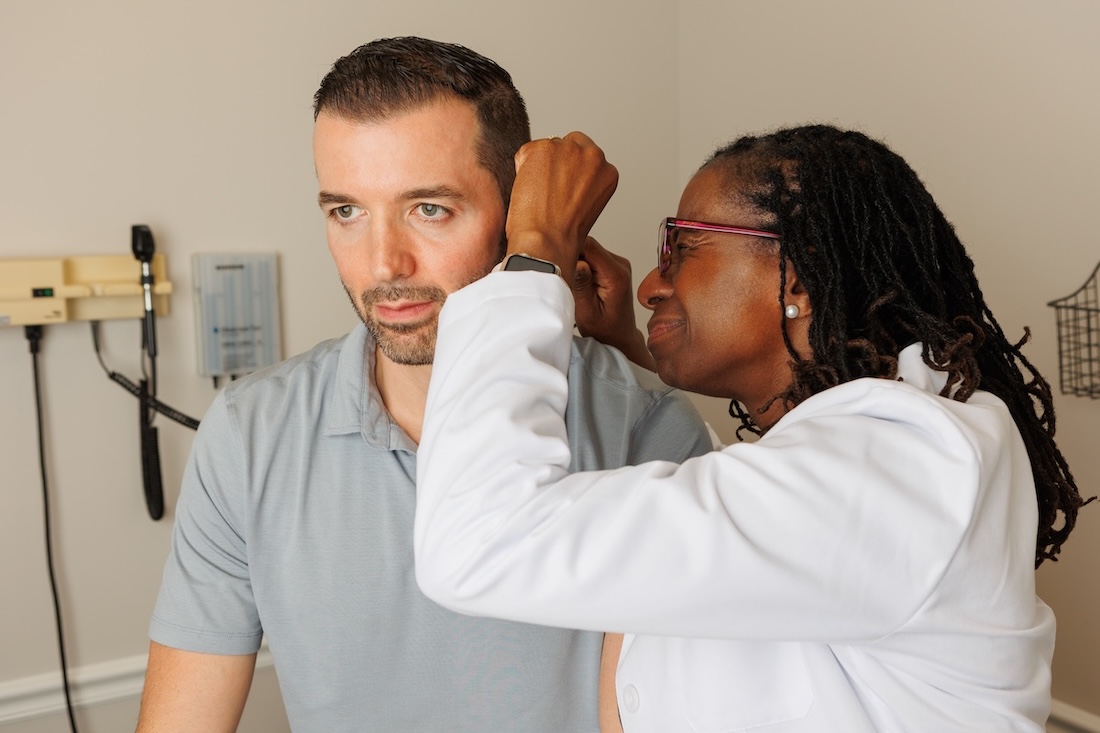


Both my husband and I absolutely love Dr Deshommes. She is so thorough and always has time for to listen to what you are saying.
Carol H.
Both my husband and I absolutely love Dr Deshommes. She is so thorough and always has time for to listen to what you are saying.
Pre-diabetes: Why Early, Personalized Care Matters—Especially for Those at Higher Risk
Diabetes – Lifestyle and Genetics
Pre-diabetes affects millions of adults and often develops quietly, without noticeable symptoms. For many, it is discovered incidentally during routine lab work—yet it represents a critical warning sign. Without timely intervention, prediabetes frequently progresses to type 2 diabetes, significantly increasing the risk of heart disease, stroke, kidney disease, nerve damage, cognitive decline, and loss of independence later in life.
For active adults, executives with demanding schedules, and older adults focused on longevity, early and proactive management of prediabetes is essential—and highly effective when guided by the right physician.
What Is Prediabetes?
Prediabetes occurs when blood glucose levels are elevated but not yet in the diabetic range. Common indicators include:
- Elevated fasting glucose
- Increased hemoglobin A1C
- Insulin resistance
- Family history of diabetes
- Abdominal weight gain
- Fatigue, brain fog, or sugar cravings
Many patients—especially those who remain active—are surprised by this diagnosis. Genetics play a powerful role, and even individuals who exercise regularly and eat well may be at risk due to inherited metabolic tendencies.
Genetics, Aging, and Lifestyle: Why a One-Size-Fits-All Approach Fails
Patients with a genetic predisposition to diabetes often require more than generic advice. This is particularly true for:
- Active adults and retirees in Jupiter and Tequesta who want to preserve mobility and independence
- Executives and professionals in Palm Beach Gardens balancing stress, travel, and long workdays
- Geriatric patients in Juno Beach aiming to prevent complications that threaten quality of life
- Without individualized medical oversight, many patients are told to “watch and wait”—allowing disease progression rather than prevention.
The Role of Preventive Concierge Medicine in Prediabetes
Preventive medicine focuses on identifying risk early and intervening strategically—before irreversible damage occurs. A concierge primary care physician is uniquely positioned to do this.
By working closely with a physician, patients benefit from:
- Advanced metabolic and cardiovascular testing
- Early identification of insulin resistance trends
- Personalized nutrition strategies based on genetics and lifestyle
- Safe, medically guided weight optimization
- Ongoing monitoring and proactive adjustments
This level of care is particularly valuable for older adults managing multiple health considerations and high-performing professionals who need efficient, coordinated medical guidance.
A Personalized Care Plan—Not Just Lab Results
Effective prediabetes management requires a comprehensive, individualized strategy:
- Precision Testing
Detailed metabolic, inflammatory, and cardiovascular markers help identify early dysfunction—often years before diabetes develops.Nutrition Tailored to the Individual
Dietary guidance must align with insulin response, hormonal balance, activity level, and cultural preferences—not trends or fads. - Targeted Movement
Exercise plans should improve insulin sensitivity while supporting joint health, muscle mass, and cardiovascular endurance—especially important for aging adults. - Weight & Body Composition Optimization
Even modest reductions in visceral fat can significantly improve blood sugar control when done safely and under medical supervision. - Ongoing Physician Partnership
Prediabetes is dynamic. Regular follow-up allows the care plan to evolve with age, stress levels, travel schedules, and changing health goals.
Concierge Preventive Care With Dr. Beatrice Deshommes, M.D., FACP
As a board-certified internal medicine physician, Dr. Beatrice Deshommes, M.D., FACP provides concierge primary care with a strong focus on prevention, metabolic health, and long-term wellness. Her approach is ideal for patients who are genetically predisposed to diabetes and want to take control of their health before chronic disease develops.
Dr. Deshommes partners closely with her patients to:
- Identify early metabolic risk factors
- Develop realistic, sustainable lifestyle strategies
- Prevent progression to type 2 diabetes
- Support cardiovascular, cognitive, and functional health as patients age
- Her concierge model allows for longer visits, deeper analysis, and proactive care—particularly beneficial for geriatric patients, active retirees, and busy executives who value continuity and personalized attention.
Serving Northern Palm Beach County’s Active & Aging Population
Dr. Deshommes proudly provides concierge primary care for residents of:
Jupiter
Palm Beach Gardens
Tequesta
Juno Beach
Whether you live in Admirals Cove, Jonathan’s Landing or PGA National, these communities are home to South Florida individuals who prioritize longevity, independence, mental clarity, and an active lifestyle—well into later decades of life.
Prediabetes Is an Opportunity for Prevention
Prediabetes is not a failure—it is an early warning and an opportunity. With the guidance of a preventive, concierge internist, patients can often reverse course, preserve vitality, and avoid the complications that diminish quality of life.
For those seeking a trusted, personalized medical partner in Northern Palm Beach County, concierge preventive care offers a smarter, more proactive path forward.
Senior Care Resources
Beatrice Deshommes, M.D.
Concierge Primary Care Physician | Board-Certified in Internal Medicine
Dr. Beatrice Deshommes, a board-certified internist with more than two decades of clinical experience, is known for her thoughtful, relationship-centered approach to primary care. She provides a high level of attention, medical insight, and continuity that supports patients through both preventive health needs and complex medical conditions.
Dr. Deshommes earned her medical degree from New York University School of Medicine and completed her Internal Medicine residency through the University of Rochester Primary Care Program, later serving as Chief Resident at Rochester General Hospital. Her experience spans hospital medicine, outpatient primary care, and clinical leadership roles focused on improving patient outcomes.
Before joining Concierge Internal Medicine Associates, she served as a trusted primary care physician and development mentor with ChenMed, where she became recognized for her compassionate, thorough care—especially for patients managing chronic or age-related conditions.
As a Fellow of the American College of Physicians (FACP) and active member of the Florida Medical Association and T. Leroy Jefferson Medical Society, Dr. Deshommes remains engaged with ongoing medical advances and evidence-based practice.
Preventative Medical Care with Experience
Dr. Deshommes is currently practicing in a hybrid role, dividing her time between Jupiter Internal Medicine Associates and Concierge Internal Medicine Associates as she builds her concierge membership panel. Once her membership reaches capacity, she will transition fully into the concierge model—ensuring continuity and personalized access for all enrolled members.
Patients choose Dr. Deshommes for her clear communication, comprehensive evaluations, and dedication to long-term wellness. She welcomes individuals seeking a concierge-level primary care experience in Jupiter, Palm Beach Gardens, Juno Beach, and the surrounding communities.
New Study Makes Breakthrough in the Study of Cardiovascular Disease
In the United States, the leading cause of death is heart disease. In fact, in any given year, about one in four deaths in the United States comes as a result of heart disease. This number averages close to seven hundred thousand. As you might imagine, finding solutions and treatments for cardiovascular diseases has long been a priority for medical researchers across the world. Recently, a study published in the medical journal Science Translational Medicine has made a potentially huge discovery that could help make a meaningful impact in treating and preventing heart disease. They found twenty-seven genetic markers It even has the potential to help increase the speed that drugs for cardiovascular diseases can be developed and produced. In this article we’ll cover their findings, and the implications of them, to help you understand the importance of this breakthrough.
What are Genetic Markers and What Is Their Importance
To find these pivotal genetic markers the scientists in the study had to sift through and examine five thousand different markers, but what exactly is a genetic marker? Genetic markers are DNA sequences that can be mapped onto a specific location on a chromosome. Genetic markers allow scientists to link diseases with the gene responsible for it, which allows for greater understanding of the relationship between disease and individuals. In this case, machine learning was used to identify these twenty-seven genetic markers that when combined can predict the risk of stroke, myocardial infarction, and heart failure over a four period. This information is vital in the battle to prevent deaths from cardiovascular diseases, as these predictions can allow doctors to begin a treatment plan for at-risk patients before the disease becomes serious or too far gone. Having advance notice can be the difference between saving lives and losing them. In addition to that, the method used by the scientists in the study has provided evidence that this method of identifying proteins works, which can lead to even more success identifying predictive genetic markers in the future.
The Effect on Pharmaceutical Drug Production
As mentioned above, not only does this breakthrough help make treating patients more effective, but also could enable the production of life saving medicine to be streamlined. This is because of its potential implications as a surrogate biomarker. When medical drugs are being developed and tested, they have to undergo a lengthy and intensive process to vet them and verify their safety and efficacy. This process can often take years. One way that this can be shortened is if a surrogate biomarker with predictive capabilities exists, as this allows testing to be done quicker and more accurately. These surrogates are worth their weight in gold, and the twenty-seven genetic markers that were identified have the potential to impact the ability to have surrogate biomarkers for cardiovascular diseases. In all, this breakthrough has the potential to impact lives for the better in a massive way. However, it is important to note that, like any other breakthrough there is still a long way to go until the impact of it is felt in its fullest form. Even so, this study should be celebrated as an important moment in the battle against cardiovascular disease.